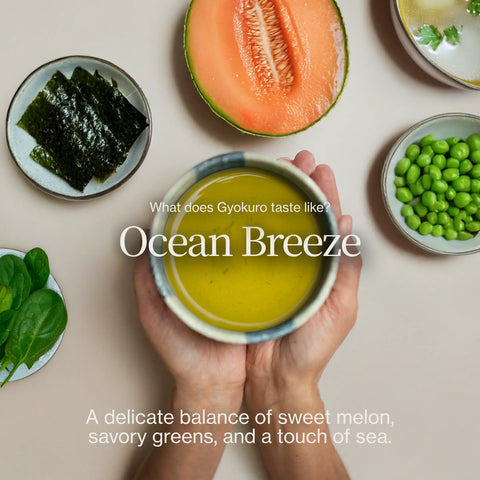
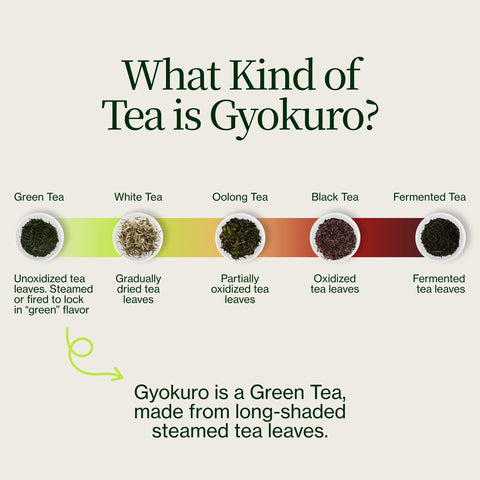
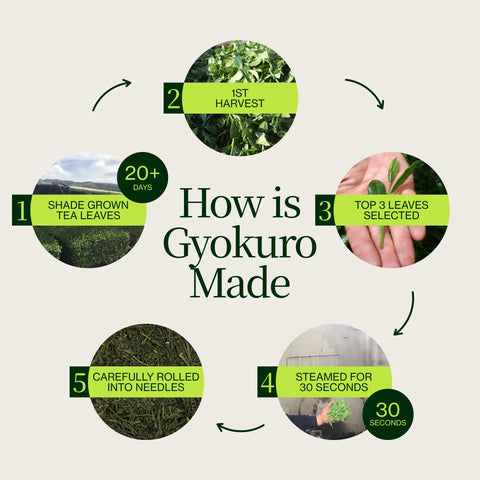
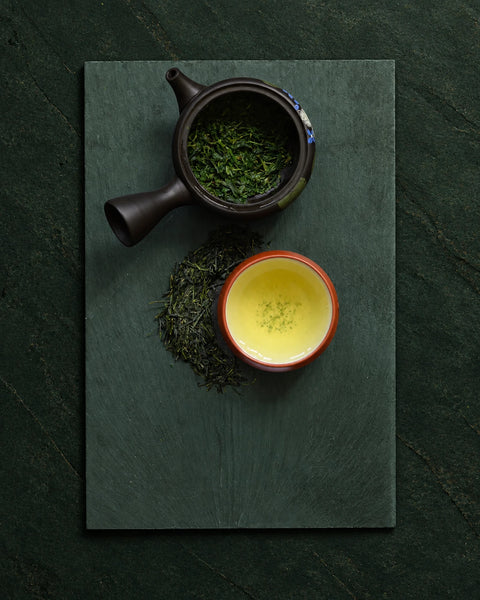
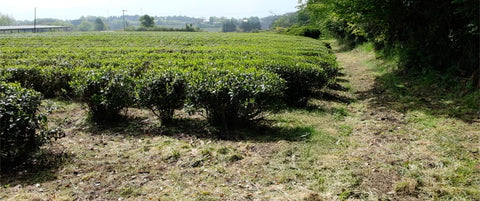
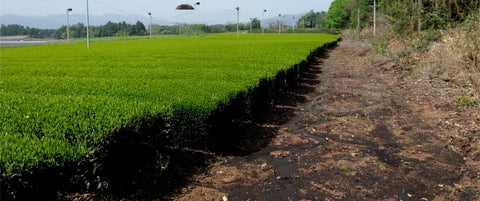
Gyokuro is grown in the dark. For around three weeks before harvest the bushes are covered with reed screens or black netting, cutting out most of the sunlight and leaving the plant with more theanine and fewer catechins. The result is Japan's sweetest, most savoury leaf tea: thick, almost broth-like, with a deep marine umami and very little bitterness. It has to be brewed accordingly — a generous amount of leaf, a small volume of water at a low temperature, and a patient steep. Treated that way it is less a refreshing drink than a concentrated one, and the later infusions, brewed hotter, open it back up.
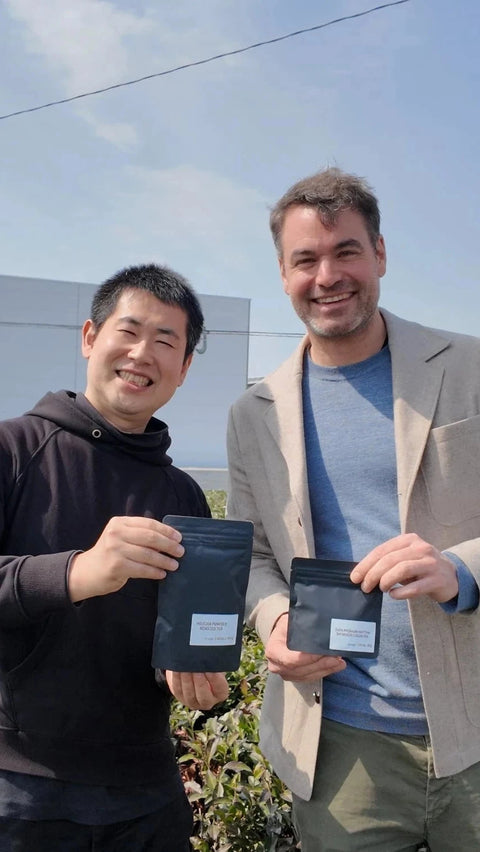
Tea Artisan: SakamotoさんKagoshima
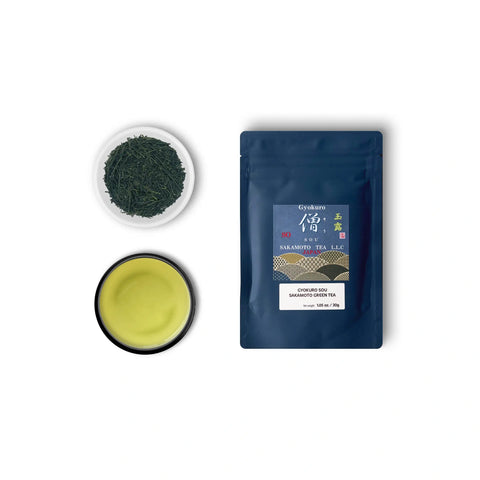
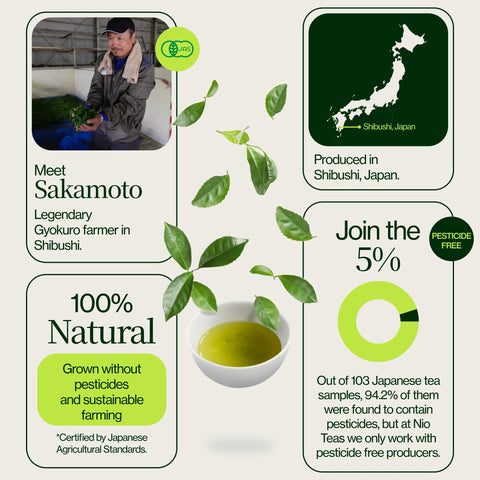
The Gyokuro Sou Sakamoto is produced in Shibushi, Kagoshima, a region blessed with rich volcanic soils and clean air. Here, Mr. Sakamoto has perfected his craft over decades, becoming one of Japan’s most respected pioneers in organic gyokuro production.
By refusing shortcuts and investing in natural soil enrichment, he cultivates tea plants that thrive without chemicals. His dedication results in teas that not only taste exceptional but also preserve the health of the land and ecosystem.
With Gyokuro Sou Sakamoto, you taste more than tea, you taste the results of a lifetime of innovation, care, and respect for nature.
Origin: ShibushiJapan
The Gyokuro Sou Sakamotocomes from the fertile volcanic soils ofShibushi in Kagoshima, a region renowned for producing Japan’s sweetest and richest gyokuro teas. Sou was designed by Mr. Sakamoto to highlight depth and layered complexity, made possible by the area’s subtropical climate and nutrient-dense soil.
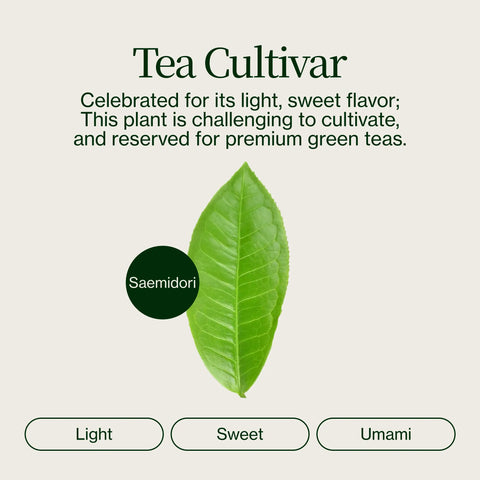
Cultivar: SaemidoriTea variety
Saemidori: Saemidori is a prized cultivar in Japan, valued for its naturally smooth and sweet flavor. It produces a vibrant green liquor and a gentle umami that is less astringent compared to other varieties. Farmers appreciate Saemidori for its early harvest time, which allows them to capture the first flush of nutrients at the peak of spring. For gyokuro, this cultivar delivers a refreshing sweetness alongside a subtle marine note, making it especially well suited for long shading periods.
Preparation & ServingsUp to 18 cups
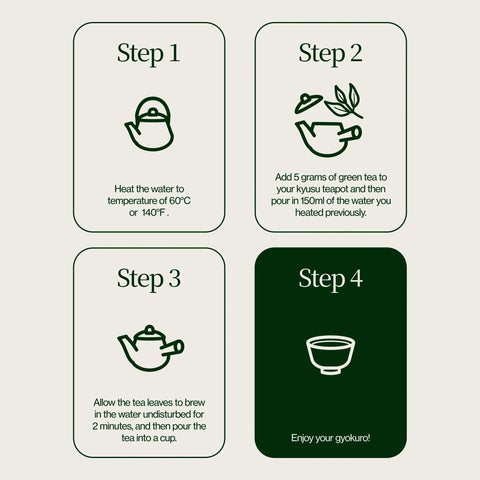
Hot brew: 5 g of leaves, 150 ml of water at 60°C (140°F), 2 minutes.
Brew it again: the same leaves give 3 infusions. Re-infuse 2 more times with water at the same temperature, 30 seconds each; every infusion tastes a little different.
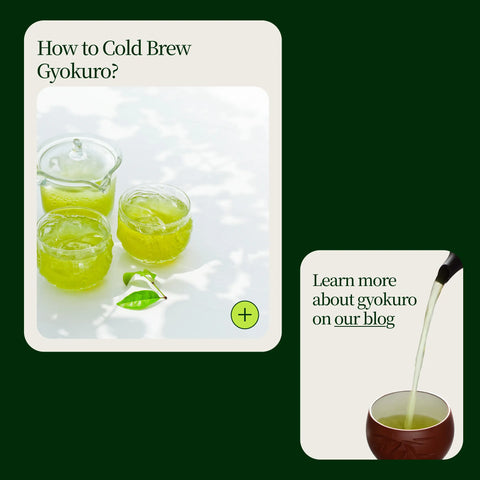
Cold brew: For a refreshing twist, Gyokuro Sou Sakamoto also works beautifully as a cold brew. Steep 5–10g of leaves in 500ml of cool water for 3–6 hours and enjoy a smooth, sweet, and cooling cup.
One pack: Up to 18 cups · 6 × 5 g servings, 3 infusions each · 30 g / 1.1 oz.
Why choose Nio Teas?
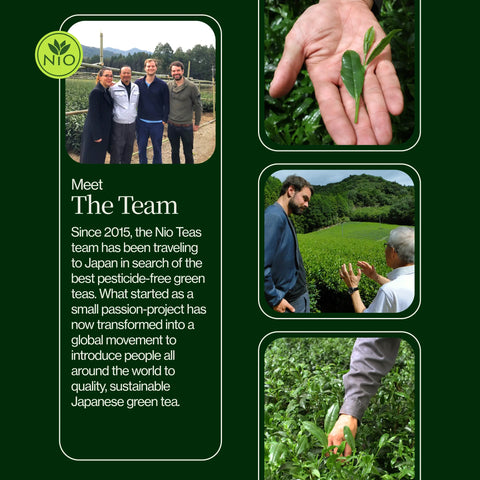
For us, tea is more than a beverage, it’s a way of life. We’ve spent years visiting tea farms across Japan, tasting teas with the people who grow them and building lasting, direct relationships. We believe this is the most sustainable way to source tea: fewer intermediaries, greater traceability and a closer connection between farmer and drinker.
Every tea is 100% pesticide-free and carefully selected for its taste, origin and craftsmanship. Whether you’re discovering Japanese tea or comparing cultivars and terroirs, you’ll find honest tasting notes, precise brewing guidance and real support to help you get the best from every cup.
Typical values per 100 ml of brewed tea, from the Standard Tables of Food Composition in Japan (MEXT, 8th edition), gyokuro infusion (food no. 16034; 10 g leaf, 60 ml water at 60°C, 2.5 min). Values in your cup vary with the leaf, the water and the brewing time.
Complete Your Tea RitualNo Kyusu or Shiboridashi at home? No problem!
100% Pesticide-FreeDirect from FarmersPure & UnblendedSingle-Origin TerroirSmall-Batch HarvestAuthentic Japanese Craft
Unveiling Gyokuro's Superfood Power
•
Caffeine
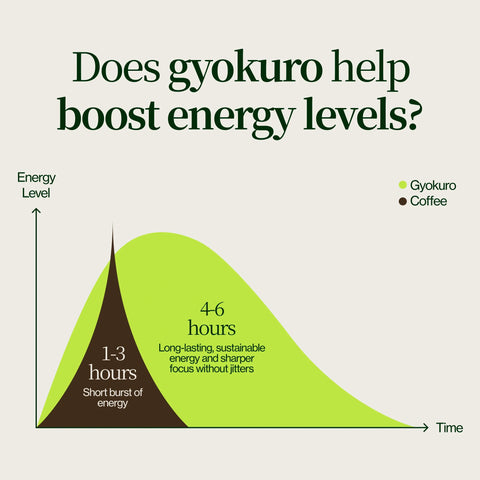
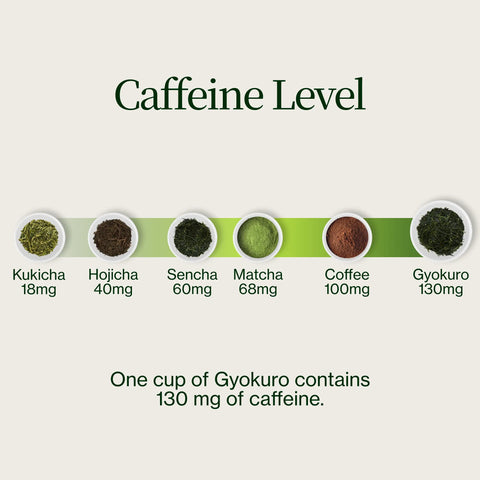
Natural caffeine for a gentle, sustained lift.
•
Antioxidants
Rich in catechins and other naturally occurring antioxidants.
•
Chlorophyll
Naturally rich in chlorophyll, the pigment behind matcha’s vibrant green colour.
•
Potassium & Calcium
Naturally occurring minerals that contribute to matcha’s nutritional profile.
•
L-theanine
An amino acid naturally found in tea, associated with a calm, focused feeling.
•
Vitamins A, C, E & K
Contains a range of vitamins naturally present in the whole tea leaf.
Why Buy Your Gyokuro from Nio Teas
No middlemen, no pesticides, no risk.
30-Day Satisfaction Guarantee
Try it with confidence. If it isn’t right for you, contact us within 30 days.
15 Japanese Tea Farmers
Our tea brings together the craft and regional expertise of 15 partner farmers across Japan.
Direct from Farmer to Cup
We build lasting relationships with our farmers for fewer intermediaries and greater traceability.
100% Pesticide-Free Gyokuro
Every Gyokuro is grown without pesticides, then personally tasted and selected by our team.
How to Make Gyokuro Like a Pro
Gyokuro is best enjoyed with lower water temperatures and longer brewing times, which allow its sweetness and umami to shine without bitterness.
Heat the Water
Heat water to 60°C (140°F).
Add the Leaves
Add 5 g of leaves to a kyusu or shiboridashi.
Steep
Pour 150 ml of water and steep for 2 minutes.
Pour & Brew Again
Pour out every drop, then brew the same leaves 2 more times (30 seconds each).
Loose Leaf Tea Over Teabags
Rich in Flavor, Not in Microplastics.
Legendary organic tea farmer in Shibushi.
Farmer: Sakamotoさん
Mr. Sakamoto is a legendary organic green tea farmer in Shibushi, Kagoshima. Over decades in the tea industry he has found a sustainable way to make flavourful gyokuro and matcha without pesticides or chemicals, using an organic fertiliser he developed himself from organic compost and a sedimentary rock mulch.
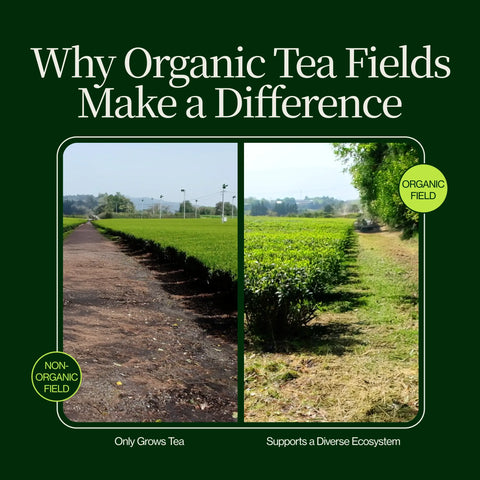
Why Organic Gyokuro Fields Make a Difference
Tea plants absorb everything from the soil, making pesticide-free farming especially important. The farmers we work with have found a way to grow delicious tea without harming the natural ecosystem.
Nio teas has been my favourite place to purchase good quality teas for a while now, and still they never disappoint me. Their teas are excellent quality, however, I’d like to give more attention to customer service - Nio team has been very kind and helpful each time I had any sort of problem. Their customer service never disappoints, they are very attentive and quick in responding to any queries, hence why I’ve been a loyal customer for a while now.
Apr 1, 2026
5 out of 5 stars
5/5
Sean
My favorite vendor for Japanese organic loose leaf green teas. They are sourcing some of the best organic teas out of Japan and supporting family farmers and the growing organic tea industry as a whole.I have ordered from every vendor for years and Nio consistently has the best prices and selection overall. They provide top notch customer service and fast shipping as well. Highly recommended 🍃
Shipping is free once your order passes the threshold for your country — USD 54.99 · EUR 54.99 · GBP 44.99 · CHF 49.99 · CAD 74.99 · DKK 399 · SEK 599 · PLN 229 · CZK 1,290. Everywhere else it's the equivalent of USD 54.99, converted automatically. Below the threshold a flat rate applies, always shown at checkout before you pay.
We ship from warehouses in the US, the EU and Japan — whichever is closest to you. US and EU orders arrive in 4–12 business days; the handful of countries served from Japan take around 10. Business days count from dispatch rather than from when you order, and exclude weekends and public holidays. You'll get a tracking number by email the moment your parcel leaves the warehouse.
We only buy from fields grown without pesticides or chemicals. We ask each farmer directly how they manage their land, visit the plantation and processing facility ourselves, taste every harvest before committing, and check that the biodiversity around the fields is alive. Small family farms don't always carry paperwork — so we verify it in person instead.
Japanese green tea covers an enormous range, and choosing online isn't easy. If you've tried yours and it isn't for you, email info@nioteas.com within 30 days with your order number and a line on what you didn't enjoy. We'll send a different tea of equal or lower value, free. Nothing to post back — keep it, share it, or try brewing it cooler. Once per order.
Email info@nioteas.com within 30 days with your order number and a photo. We'll approve it, cover the return postage with a prepaid label or a reimbursement, and refund you — no restocking fee. Refunds go to your original payment method within 2 business days of the return reaching us; your bank may take another 5–20 to show it.
Unopened items in their original packaging can be returned within 30 days. Tea is sealed for hygiene, so opened packs can't come back — but the swap above covers exactly that situation. Return postage is yours unless the item arrived damaged, defective or incorrect.
Orders to the US and EU ship domestically from our local warehouse, so there's no customs charge and no duty. A small number of destinations are served from our Japan warehouse, where your own customs authority may apply import duty, VAT or a carrier handling fee on delivery. Those are set by your country, not by us. Ask before you order and we'll help you check.
I must admit: for the price point, I would never have tried this tea except for the fact that I got it for free as part of the anniversary sale. Nearly $50 for 30 grams of tea is a bit out of my price range. As such, this will become a special occasion tea for me, since gyokuros can be aged longer than senchas.
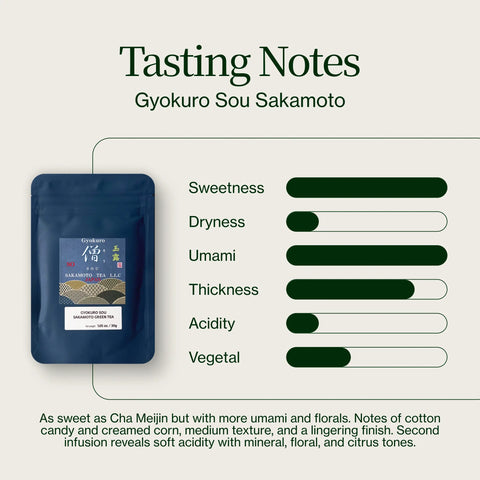
The aroma is deceptively mild, with classic sencha notes of steamed vegetables, but also hints of corn and sweet cream just under the surface. This isn't an extremely aromatic tea, but compensates for that by giving enjoyable complexity in the flavor.
When you take your first sip, the mouthfeel gives some minerality and a thick, brothy texture that coats the tongue. It greets you with a brisk umami and a very mild bitterness that quickly fades into floral sweetness with a hint of sweet corn, then lingers as a mild rocky mineral aftertaste with recurring hints of vegetal umami. And when I say that aftertaste lingers, it REALLY lingers. I was still tasting it a solid 10 minutes after my first cup, and the aroma remained even longer, which is insane, I've never had a Japanese tea linger that long.
I highly recommend not only brewing this tea at very cool temperatures (as gyokuro should be), but I also recommend using much less water than usual as well. This allows the tea to have that stronger, syrupy texture and bold flavor.
If I had to compare it to anything, I'd say it's like a more umami version of the Cha Meijin, if you've been a Nio Teas customer for a while. My only real complaint is the price point. Again, $50 for 30 grams of tea is a bit on the excessive side. I understand gyokuros are more labor-intensive and are carefully blended, but in this economy, not too many people are going to be able to truly afford that price. If it were $40 or less, I could see myself repeat-buying because it's otherwise a very solid tea.
I’ve never had proper Japanese green tea before. Nio Teas has been a wonderful introduction. They added this Gyokuro as a gift and it really is something unique. It’s one of those things in life that keeps your attention because there is so much to explore every time you experience it. I enjoy those moments. Thanks guys!
Un te exquisito. Es de los más umamis que he probado. El sabor es intenso, delicado y con múltiples capas. De mis tés verdes favoritos, junto con el fukamushi sencha.
It isn’t anything you need to improve. I didn’t like the flavor. I guess I didn’t understand the flavor profile I studied your different teas for at least 3 months to get a better grasp of what I might want. This is all new to me. My first order of any green teas. I haven’t been able to give it a second chance. The taste didn’t agree with me! I will give it another chance. Too expensive not to try to acquire a taste for it. I thought since this was a more expensive tea it would have a better taste lol. I like the roasted Hojicha so much better!
When your samplers are back in stock I would love to try other flavors!
The first steeping could not have tasted better; perhaps my favorite green tea. However, the second steeping did not exceed the second steepings of other, less extraordinary teas.