

Oolong vs jasmine tea is one of the more misunderstood comparisons in the tea world, and the confusion is understandable.
On the surface, they can smell similar; both carry floral notes. But they are built on completely different foundations.
Oolong is defined by its oxidation level. Jasmine tea is defined by its scenting process, and the base leaf underneath can be almost anything.
That single difference changes everything: the flavor, the caffeine, the way the tea behaves across multiple infusions, and the kind of experience you get from each cup.
This article breaks down exactly where they diverge on taste, caffeine, health benefits, and brewing, so you can make a clear choice between the two.
Let's get started!
Oolong vs Jasmine Tea: One Is Processed, One Is Flavored

Oolong vs jasmine tea starts with a fundamental difference in how the teas are made. Oolong is a partially oxidized tea category, while jasmine tea is created by scenting an existing tea leaf with jasmine flowers. Oxidation levels can range from around 15% all the way up to 85%, which is why oolong covers such a wide spectrum of flavors, and why the different types of oolong can taste like entirely different teas.
Jasmine tea is not a tea type in the same sense. It is a scented tea, meaning a base tea leaf has jasmine flowers layered over it during production so the leaves absorb the floral aroma. Most jasmine tea uses green tea as the base, but it can also be made with white tea, black tea, or even oolong.
This is the core difference in the jasmine tea vs oolong comparison: oolong is a processing style, while jasmine is a flavoring technique applied on top of an existing tea.
Flavor Comparison: Layered Complexity vs Consistent Florals
What Oolong Tastes Like
Oolong's flavor shifts depending on its oxidation level, a contrast that becomes even clearer when you compare it against something like sencha, where the flavor profile stays much more fixed. Lightly oxidized oolongs sit close to green tea in character, fresh, floral, sometimes creamy, though the differences between the two become significant once you look closely at how green tea vs oolong tea diverges in processing and flavor depth.
Darker oolongs move toward roasted, toasty, and mineral notes. Japanese oolongs in particular tend toward perfumed florals with a clean, light sweetness.
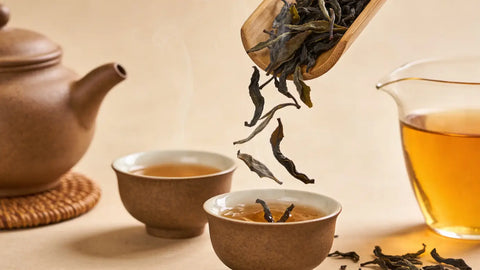
Because oolong leaves are rolled into tight balls or twisted strips, they unfurl slowly during steeping. Each infusion pulls out a slightly different layer of flavor. This is why oolong handles multiple steeps so well; the tea evolves rather than repeating itself. Curious about the full flavor range before committing? 👉 What Does Oolong Tea Taste Like? What to Expect in the Cup
What Jasmine Tea Tastes Like
Jasmine tea leads with aroma. The floral scent from the jasmine blossoms is the defining characteristic, while the base tea provides a quieter backdrop. When the base is green tea, that background tends to be light and slightly grassy. With a white tea base, it becomes even more delicate.
The cup is consistent across steeps, but it fades faster than oolong. The jasmine fragrance sits on the surface of the leaf rather than being built into the leaf structure itself, so each subsequent infusion is noticeably lighter.
Oolong vs Jasmine Tea Caffeine: Which Has More?
Oolong Caffeine Levels
Oolong typically contains between 30 and 55 mg of caffeine per 8-oz cup, though this varies significantly by style. Lighter, less oxidized oolongs tend to sit toward the lower end. Darker, more heavily oxidized or roasted oolongs push higher on the caffeine scale and begin to approach black tea territory, a comparison worth understanding if you are deciding between the two. The rolled whole-leaf format releases caffeine gradually, which is part of why the energy from oolong feels smooth rather than sharp.
For anyone researching oolong vs jasmine tea caffeine specifically, oolong is generally the stronger option of the two when jasmine is made from green tea. For a deeper look at how processing affects caffeine output in oolong, 👉 Does Oolong Tea Have Caffeine? It Might Surprise You!
Jasmine Tea Caffeine Levels
When made with a green tea base, jasmine tea contains roughly 20 to 45 mg of caffeine per cup. That makes it noticeably lighter than most oolongs. However, jasmine black tea can reach caffeine levels comparable to or even higher than oolong, since the base leaf drives the caffeine, not the flowers.
So, in the jasmine vs oolong tea caffeine comparison, the answer always depends on which base tea the jasmine version is built on. Green-based jasmine is the milder cup. Black-based jasmine can surprise you.
Oolong vs Jasmine Tea Benefits: Where They Differ
What Oolong Supports

Oolong contains polyphenols and catechins that have been studied in relation to metabolic support, cholesterol management, and blood sugar regulation. Research has found that the polyphenols in oolong can activate enzymes involved in fat metabolism, which is why it comes up frequently in conversations about weight management. It also retains a meaningful amount of L-theanine, which supports focused, calm alertness without excessive stimulation.
For those comparing oolong vs jasmine tea benefits with metabolism or sustained focus in mind, oolong has a more studied track record in this area.
What Jasmine Tea Supports
Jasmine tea, when made from a green tea base, carries much of green tea's antioxidant profile, particularly EGCG, which is associated with cardiovascular and cellular health. The jasmine flowers themselves contribute a distinct element: the scent of jasmine has been studied for its effect on mood and stress response. Some research suggests that inhaling jasmine aroma can lower heart rate and shift the nervous system toward a calmer state.
This makes jasmine tea vs oolong a straightforward split for most people: oolong leans toward metabolic and cognitive support, while jasmine tea leans toward relaxation and antioxidant intake.
How to Brew Each Tea Correctly
Brewing Oolong

Oolong handles higher temperatures than green tea. A water temperature of around 85 to 95°C works well, with the lighter styles sitting at the cooler end and darker roasted oolongs tolerating the higher end. Steep for two to three minutes for the first infusion, and if you want a detailed walkthrough of the full process, there is a complete guide to brewing oolong tea that covers water temperature, leaf ratios, and re-steeping technique.
Because the leaves open slowly, oolong is excellent for re-steeping three to five infusions from the same leaves, which is normal, with each one evolving slightly.
Oolong tea vs jasmine tea when it comes to brewing: Oolong gives you more flexibility. You can adjust temperature, steep time, and the number of rounds to shape the flavor you want.
Brewing Jasmine Tea
Jasmine tea made from green tea is more delicate. Water temperature should stay around 75 to 85°C to avoid scalding the leaves and turning the cup bitter. Two minutes is enough for the first steep. Re-steeping is possible, but the jasmine aroma fades quickly by the third infusion; it may be largely gone.
If you are new to loose leaf teas, jasmine is a forgiving entry point: the flavor is consistent, approachable, and unlikely to surprise you. If you want a tea that grows with your palate over time, oolong rewards that curiosity.
Oolong Tea vs Jasmine: Choosing Based on What You Actually Want
If you want a tea with complex, evolving flavor, multiple usable infusions, and moderate caffeine that rises gradually, oolong is the stronger choice. Japanese oolong in particular offers a rare, floral, and perfumed style, with a lighter character than most Chinese varieties.
If you want something gentle, consistently floral, and lower in caffeine, green-based jasmine tea is the right pick. It is well-suited to evenings or moments when you want to wind down without switching to a caffeine-free option entirely.
The jasmine vs oolong tea debate does not have a universal winner. It depends entirely on whether you are drinking for flavor depth and energy, or for calm and aroma. Put oolong vs jasmine tea side by side, and the answer usually becomes obvious after a single cup of each.
For those interested in exploring Japan's approach to oolong, the Nio Teas loose leaf collection includes rare Japanese oolongs that sit outside the typical Chinese oolong profile, worth trying if you have only experienced the standard styles.
Two Different Teas Asking for Different Things from Your Day
The oolong vs jasmine tea comparison ultimately comes down to purpose. Oolong is a tea built for exploration it changes with each steep, rewards attention, and carries a caffeine profile suited to mornings and focused afternoons. Jasmine tea is built for ease: consistent, aromatic, and gentle enough for any time of day when you want something pleasant without complexity.
Put simply, the jasmine tea vs oolong tea difference is a question of depth versus simplicity. Both are worth drinking. But they are solving for different things.
Neither is a better tea in absolute terms. But knowing which experience you are after makes the choice straightforward. Oolong asks you to pay attention. Jasmine asks you to sit down and slow down.
If you are curious about oolong and want to explore the category before deciding, the Nio Teas oolong collection is a good place to start. If you are still undecided, try both back-to-back on the same morning. The contrast usually becomes clear quickly.

Comments (0)
There are no comments for this article. Be the first one to leave a message!