
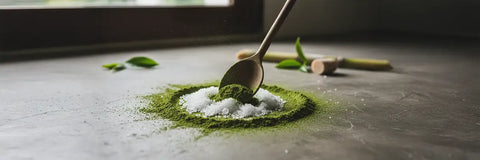
If you have ever picked up a cup of matcha and asked yourself, is matcha sweetened by nature? or does the sugar come from the café, you are not alone. Matcha has grown enormously in popularity, appearing on menus worldwide in lattes, smoothies, desserts, and bottled drinks.
The short answer is that pure matcha powder contains no sugar at all, it is a naturally bitter and savoury ingredient. The sweetness you taste in commercial drinks almost always comes from syrups, flavoured milk, or pre-sweetened powder blends.
Understanding the difference helps you make smarter choices, whether you are a health-conscious drinker or simply after the best flavour. Read on to discover the full truth about matcha and sugar, and what you will actually find in drinks from major chains.
Is Matcha Sweetened in Its Natural Form? The Answer Is No

Pure matcha powder is made by stone-grinding the dried leaves of shade-grown Camellia sinensis tea plants.
The result is a fine, vivid green powder with a complex flavour profile earthy, grassy, and distinctly umami, with a gentle bitterness that lingers pleasantly on the palate. There is no sugar in the process whatsoever.
This natural bitterness comes from the high concentration of catechins and caffeine present in the leaf.
Shade-growing the plants before harvest boosts chlorophyll and L-theanine, which softens the sharpness slightly, but does not eliminate it. High-quality ceremonial grade matcha, in particular, carries a smooth, rounded bitterness that tea enthusiasts prize.
So when someone asks whether is matcha sweetened at its source, the answer is a clear no.
Pure matcha is an unsweetened ingredient, just like ground coffee or loose-leaf tea. What you do with it afterwards is entirely up to you.
Matcha Lattes Are Sugar Bombs!

When matcha appears in lattes, bubble teas, or ready-to-drink bottles, it is nearly always sweetened externally. The most common sweetener added to matcha beverages is simple syrup or cane sugar, used in amounts that can vary widely depending on the café or recipe. Some establishments also use honey, agave, condensed milk, or flavoured syrups.
Usucha or Koicha Matcha Does Not Cause Insulin Spikes
In home preparation, many people whisk a small amount of ceremonial matcha with hot water and then add their choice of sweetener or none at all. Traditional Japanese preparations such as koicha (thick matcha) and usucha (thin matcha) are served entirely without sugar, allowing the natural complexity of the tea to take centre stage.
At home, you are in full control of what goes into your cup; at a café, the sweetener has almost always already been chosen for you. In its purest form, matcha needs nothing added, but in commercial settings, sugar or syrup is the standard. This is why is matcha sweetened is best answered by looking at the source of your drink, not at matcha itself.
That Sweetened Matcha from Starbucks, Dunkin' or Scooter's? Total Nuclear Bomb!
Low Quality Matcha Powder Blend with Sugar
Yes, Starbucks matcha is sweetened, and it is important to understand why. Starbucks does not use pure ceremonial-grade matcha powder. Instead, the chain uses a proprietary matcha tea blend that contains sugar as its second ingredient, listed right after matcha powder itself on the label.
This means the sweetness is built directly into the powder before any milk or additional syrup is added.
When customers ask whether is starbucks matcha powder sweetened, the answer is definitively yes. A single serving of the Starbucks matcha blend contains a notable amount of sugar even before the barista adds milk or any customisations. This is worth keeping in mind for anyone monitoring sugar intake.
The Coffee Chain Matcha Latte
The Starbucks Matcha Latte is made by combining the pre-sweetened matcha powder blend with steamed milk. Because is starbucks matcha latte sweetened at the powder stage, there is no option to simply order an unsweetened version using the standard ingredients. Customers who want less sugar would need to request fewer scoops of the matcha blend, although this will also reduce the matcha flavour.
Many matcha enthusiasts find this a notable drawback when comparing Starbucks offerings to those of specialty tea houses. If you are after an authentically unsweetened matcha experience, a dedicated Japanese tea brand using pure powder will serve you much better. If you enjoy the convenience and sweeter profile, then is starbucks matcha sweetened is simply part of the product design.
Dunkin's Matcha Approach
Dunkin also offers matcha-based drinks on its menu, and the question of whether is dunkin matcha sweetened follows a similar pattern to Starbucks. Dunkin uses a matcha powder blend that contains added sugar, making their matcha beverages sweet by default. This is consistent with the brand's overall approach to flavoured drinks, which tend to lean towards sweeter profiles.
For those wondering whether is dunkin matcha pre sweetened before it reaches the cup, the answer is yes. The matcha blend itself contains sugar, so the sweetness is already present in the powder, independent of any flavoured syrups the customer might add. Ordering a matcha latte at Dunkin without customisation will still result in a sweet drink.
Is Scooters Matcha Sweetened?
Scooter's Coffee is a US-based drive-through café chain that has introduced matcha drinks to its seasonal and permanent menus. For those asking whether is scooters matcha sweetened, the answer is yes in practice.
Like most mainstream café chains, Scooter's prepares its matcha drinks with sweetener as part of the standard recipe, typically using flavoured syrups or sweetened matcha blends.
Scooter's does not publicise its matcha powder sourcing in the way that a specialty tea brand would, so specific details about the powder itself are not always easy to confirm. What is consistent is that the finished drink is sweetened to appeal to a broad customer base, much like the offerings at comparable chains.
If you are a matcha purist or you are monitoring your sugar intake, it is always worth asking the barista at any chain café about exactly what goes into your drink and whether modifications are possible.
Pure Matcha vs Sweetened Matcha Drink: What Should You Choose?
The Case for Unsweetened Matcha
Pure, unsweetened matcha is the form that has been used in Japanese tea ceremonies for centuries. It delivers the full profile of the tea the umami depth, the lingering bitterness, the earthy green notes without the distraction of added sugar. For those who appreciate tea in its authentic form, or who are looking for the potential wellness benefits associated with green tea antioxidants, unsweetened matcha is the clear choice.
When you brew matcha at home using a high-quality powder from a trusted Japanese tea source, you have complete control over what you add. A small amount of honey, a touch of maple syrup, or nothing at all the choice is yours.
This is a significant advantage over ordering from a commercial café with pure matcha at home, whether is matcha sweetened or not is entirely your call, decided before you even place your order.
When Sweetened Matcha Has Its Place
Sweetened matcha drinks are not the healthiest choice. Added sugars can lead to rapid insulin spikes, which may cause fatigue, increased thirst, headaches, and over time contribute to weight gain and insulin resistance. Regular consumption of highly sweetened beverages can have long-term health consequences that should not be overlooked.
That said, sweetened matcha can serve as an entry point for those new to the flavour, making it more approachable for first-time drinkers. However, it is important to view these drinks as an occasional indulgence rather than a daily habit.
The key is awareness. If you are choosing matcha for its health benefits, understanding whether it is sweetened is essential. Many commercially prepared matcha lattes contain significant amounts of added sugar, sometimes comparable to flavoured coffee drinks.
Making an informed choice means prioritising pure matcha whenever possible and limiting added sweeteners to maintain its health benefits.
Final Thoughts on Matcha and Sweetness

Pure matcha powder contains no added sugar. The sweetness associated with matcha drinks at popular café chains comes from pre-sweetened blends and syrups that are added during preparation. At Starbucks, Dunkin, and Scooter's, sweetened matcha is the default, not the exception.
Understanding this distinction gives you real power as a consumer. You can choose to enjoy matcha in its pure, unsweetened form at home using quality Japanese powder, or you can enjoy a café matcha drink with awareness of what is actually in your cup.
For those looking to explore genuine, high-quality matcha from Japan, NioTeas offers a range of ceremonial and premium culinary-grade matcha powders sourced directly from trusted Japanese producers. The next time someone asks you whether is matcha sweetened, you will know exactly what to tell them and exactly how to enjoy it.



Comments (0)
There are no comments for this article. Be the first one to leave a message!