
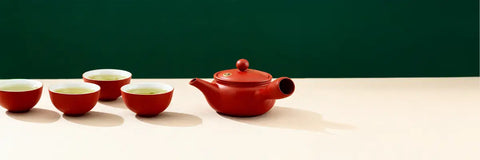
A kyusu tea set consists of a Japanese side-handle teapot paired with small cups, designed specifically for brewing and serving loose-leaf green tea with precise control over extraction.
Most people discover the kyusu when they start drinking sencha or gyokuro and quickly realise that a standard Western teapot simply does not brew these teas the same way.
The compact size, the built-in filter, the ergonomic handle, and every element of a Japanese kyusu tea set exist for a reason tied to how green tea actually extracts.
Choosing the right set is less complicated than it looks once you understand what each component does and how the material affects the tea in your cup.
This article walks you through everything inside a traditional Japanese teapot set, what makes that design different from Western alternatives, and how to narrow down the right one for your daily routine.
A Kyusu Tea Set Includes a Teapot and Matching Cups

A kyusu tea set at its most basic consists of a kyusu teapot and two or more yunomi cups. Yunomi are taller, cylindrical cups without handles, the standard everyday drinkware in Japanese households, sized to hold a single measured pour from the pot.
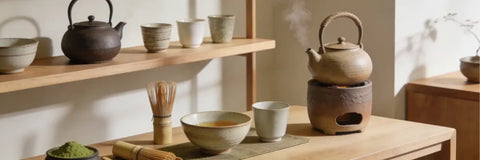
Better sets add a few extras. A chakin, which is a small linen cloth used to wipe the spout after pouring, and a tea caddy for storing loose leaves are common additions in more complete sets. Some sets also include a chazutsu, a small tin or canister that keeps tea away from air, light and moisture.
Guest-oriented kyusu sets swap yunomi for kumidashi cups, which are lower and wider. The open shape lets the aroma of sencha rise before the first sip, making them a more formal serving choice when tea is offered to visitors.
What Makes a Japanese Kyusu Tea Set Different from a Western One
The most visible difference is the handle. A yokode kyusu has a side handle positioned at a right angle to the spout, which lets you pour with a single twist of the wrist while your thumb rests on the lid to hold it in place. This is not a stylistic quirk; it is the most efficient and wrist-friendly way to pour multiple small servings in quick succession.
A Japanese kyusu tea set is also considerably smaller than a Western teapot. The standard capacity runs from 200ml to 340ml, which is enough for two to three small cups. Japanese tea is brewed in short, concentrated infusions and immediately decanted, so nothing sits in the pot to over-steep.
The built-in strainer is the third key difference. Rather than a removable mesh basket, most kyusu have a ceramic filter integrated directly into the body at the junction of the spout. This keeps the leaves in constant contact with water during steeping and then stops them cleanly the moment you pour.
The following guide covers the full design history and regional variations behind these differences. 👉 The Ultimate Guide to Japanese Teapots
How a Kyusu Tea Set Is Used for Brewing Japanese Green Tea
Brewing in a kyusu follows a short but specific sequence, and if you are new to making loose-leaf tea in general, understanding the basics first will make this process much more intuitive.
For sencha, roughly 4 to 5 grams of leaf go into the pot for 200ml of water. Gyokuro uses more leaf, cooler water and a longer steep. Once the time is up, you pour every last drop into the cups before the next round, rotating between cups to keep the concentration even. Leaving liquid in the kyusu continues the extraction and makes the second steep bitter.
The cups matter here, too. Yunomi hold about 60 to 90ml each, which is the right volume to finish before the tea cools too much. If you are using a kyusu set for gyokuro specifically, even smaller cups are better; the tea is more concentrated and is meant to be sipped slowly in small amounts.
Choosing the Right Kyusu Tea Set for Your Needs

Teapot Size and Number of Cups
A 200 to 300ml kyusu teapot set is the right starting point for most people. It brews comfortably for two and gives you the volume needed to get three or four cups through the second and third infusion without the leaves drying out between pours.
If you drink alone and want to maximise flavour extraction, a smaller 100 to 150ml kyusu gives you tighter control over the leaf-to-water ratio. These are better suited to experienced brewers who already know their preferences; beginners tend to find them limiting.
Material and Filter Style
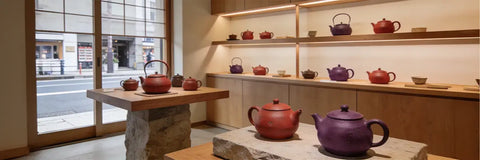
Tokoname clay is the most widely used material for a quality kyusu tea set. It has a mild iron content that may slightly soften tannins, making it particularly well-suited to sencha and gyokuro. An unglazed Tokoname kyusu, such as the Red Japanese Clay Teapot, lasts for hundreds of uses, gradually developing a patina that may gradually enhance the character of each brew over time, which is why serious drinkers treat them as long-term investments.
Porcelain is the neutral option it does not season, does not absorb flavours, and is easier to clean, making it ideal if you regularly move between different tea types, from sencha and gyokuro to lighter options like kukicha, which has a gentler profile that benefits from a clean, uninfluenced brew.
On filter style: a ceramic filter gives the leaves more room to expand and imparts no metallic note. A steel mesh filter is finer, easier to clean, and better suited to finely cut teas like fukamushi sencha, which can clog a ceramic filter if poured too quickly.
When a Kyusu Tea Set Makes More Sense Than a Single Teapot
Buying a matched kyusu set rather than a standalone teapot makes most sense when you are brewing for two or more people regularly. The cups in a coordinated set are sized and shaped to work with the pour volume of that specific teapot, which matters more than it sounds. Pour a small kyusu into oversized mugs, and the tea looks thin and cools too fast.
A kyusu set also makes a strong gift choice for tea lovers. For a couple getting into loose-leaf tea, a kyusu paired with two yunomi and a tin of good sencha, all available in the Japanese teaware and tea accessories collection, covers everything needed to start brewing well immediately.
The only case where a single teapot makes more sense is when you already own cups you love and are simply upgrading the pot itself.
How to Care for a Kyusu Teapot Set at Home

Clay kyusu should never be washed with soap. Soap penetrates the porous surface and leaves a residue that ruins the flavour of every subsequent brew. A thorough rinse with hot water immediately after use, followed by air drying with the lid removed, is all that is needed.
Porcelain and glazed kyusu are more forgiving and can be rinsed with mild soap on occasion, though hot water alone is still the recommended habit. Never put any kyusu in a dishwasher; the high heat and detergents degrade both the clay and the glaze over time.
For the yunomi cups in your teapot collection, the same basic rules apply. Rinse promptly, dry fully before storing, and keep the lid off the pot between uses so air circulates inside. A well-maintained clay kyusu improves with age rather than degrading; treated correctly, it can last for decades.
Finding a Kyusu Tea Set That Fits Your Daily Brewing Habit
The right kyusu tea set is not necessarily the most expensive or the most traditionally decorated. It is the one that matches how you actually drink tea, how many people you brew for, which teas you return to most often, and how much you care about the incremental flavour improvement that comes from seasoned clay.
For most people starting with Japanese green tea, a Tokoname clay kyusu in the 200 to 300ml range with a ceramic filter and two yunomi cups covers every realistic use case. It brews sencha cleanly, handles gyokuro well with a temperature adjustment, and holds up to daily use without special treatment.
If you want to explore the full range of Japanese teas that pair well with kyusu brewing, the Nio Teas guide to Japanese green tea varieties is a good place to start before committing to a set.

Comments (0)
There are no comments for this article. Be the first one to leave a message!