
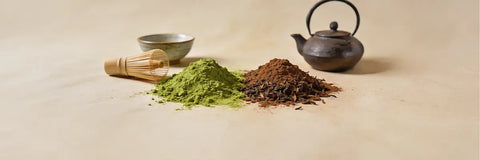
Is hojicha roasted matcha? No. Matcha is defined by its source leaf, tencha, and by the complete absence of roasting at any stage.
Both teas come from the Camellia sinensis plant, and both can be ground into fine powder, which is exactly why the confusion is so persistent.
The processing paths that create each tea are entirely different, and that difference changes everything: color, flavor, caffeine, and how each tea performs in a cup.
This article covers the full picture of how hojicha and matcha are made, what the roasting step actually changes, and when it genuinely makes sense to reach for one over the other.
People who ask whether is hojicha roasted matcha are often surprised to find how fundamentally separate these two teas are. The answer is clear once you understand the production process for each.
Is Hojicha Roasted Matcha? No, Matcha Is Never Roasted

Matcha is defined by its source leaf, tencha, and by the complete absence of roasting at any stage. Tencha is shade-grown, steamed to halt oxidation, destemmed, and ground into powder. No heat-roasting occurs.
Hojicha is defined by the opposite. Green tea leaves, stems, or a blend of both are subjected to high-temperature roasting, which caramelizes sugars, degrades chlorophyll, and produces aromatic compounds called pyrazines. The result is a brown tea with a fundamentally different chemistry.
So when someone asks is hojicha roasted matcha, the answer is a clear no on technical grounds. Roasting and matcha production are mutually exclusive processes.
The phrase "roasted matcha" occasionally appears on Western packaging for hojicha powder. It is a positioning shortcut, not a category recognized in Japanese tea taxonomy.
How Hojicha and Matcha Are Made Differently
The clearest way to understand what separates these two teas is to trace each one from leaf to cup.
How Hojicha Is Processed
Hojicha starts as harvested green tea, most commonly bancha, sencha, or kukicha, which is roasted in a ceramic pot or drum at temperatures typically between 150 °C and 200 °C.
The roasting step is not incidental; it is the defining characteristic of the broader category of roasted teas, which includes hojicha alongside less familiar styles like kamairicha.
After roasting, the leaves can be used whole in loose-leaf form or ground into a powder for lattes and cooking. Either way, the roasted character is irreversible and defines every batch.
How Matcha Is Processed
Matcha is made from tencha, a shade-grown leaf that spends its final weeks before harvest under cover. Shading increases chlorophyll and L-theanine while keeping the leaf tender.
After picking, the leaves are steamed immediately to halt oxidation, then dried. Stems and veins are removed, and the remaining leaf material is ground into powder. No roasting occurs at any point.
The vivid green color and umami-forward flavor of matcha are direct results of this process. For anyone who wants to understand it in full detail, the complete guide to how matcha is made covers every step from shading to grinding.
Hojicha Powder vs Matcha Powder: What Grinding Does Not Change
Whether is hojicha roasted matcha becomes most obvious when you compare the two in powder form. Grinding does not make hojicha into matcha; it simply delivers a more concentrated version of whatever flavor profile was built during processing.
Matcha powder is bright green, very fine, and dissolves into a smooth liquid with a grassy, savory edge. It foams well when whisked and holds its color vividly in drinks and desserts.
Hojicha powder is reddish-brown, smells like toasted grain, and produces a warm amber liquid if you want to try it in cooking or lattes. Nio Teas' hojicha powder delivers that roasted character in a format ready for immediate use. Because roasting strips out most tannins, hojicha powder is noticeably smoother and less astringent than matcha at the same concentration.
In cooking and baking, the two powders are not interchangeable. Matcha brings green color and vegetal depth; hojicha brings caramel-adjacent warmth without any bitterness. A recipe designed for one will not translate to the other cleanly. Before you buy, it helps to know which formats and suppliers are worth your time. 👉 Where to Buy Hojicha? Insiders Buying Guide
Flavor and Caffeine: What Roasting Actually Does to the Tea Leaf
Flavor: From Grassy to Toasty

Matcha carries umami, mild sweetness from L-theanine, and a grassy bitterness that experienced drinkers often find layered and complex. Ceremonial-grade matcha from the first harvest is particularly distinctive on all three dimensions.
Hojicha occupies a completely different flavor space. High-temperature roasting eliminates most chlorophyll and tannins, replacing them with caramelized, nutty notes and natural sweetness. Some batches lean toward toasted grain; others read closer to cocoa or roasted barley.
Neither is a lesser version of the other. They serve different occasions and different palates.
Caffeine: Why Roasting Lowers It Significantly
Anyone researching whether is hojicha roasted matcha often discovers that the caffeine gap between the two teas is surprisingly large. A standard 1g serving of matcha contains roughly 35 to 70mg of caffeine, depending on grade and origin.
Hojicha is far lower. Roasting degrades caffeine at the molecular level, and hojicha is often made from mature leaves and stems, which are naturally lower in caffeine than young buds. Most hojicha powders fall well below 15mg per serving, a figure that becomes even more meaningful when you look at the full breakdown of hojicha caffeine levels across different grades and preparation styles.
For anyone sensitive to stimulants or wanting a warm evening drink that does not interfere with sleep, hojicha is the practical option. Matcha is better matched to mornings and situations requiring focused energy.
Why People Think Hojicha Is Roasted Matcha
Several practical factors drive this confusion. First, both teas are sold in powder form, and most consumers associate the powder format with matcha. When a brown tea powder appears alongside matcha products, the category blur is almost inevitable.
Second, some brands in Western markets deliberately label hojicha powder as "roasted matcha" because matcha carries brand recognition that hojicha has not yet built outside Japan.
Third, the preparation method is similar. Both teas can be whisked with hot water, added to steamed milk, or incorporated into baked goods. That practical overlap reinforces the assumption that they share a category.
The simplest way to check whether is hojicha roasted matcha: look at the color. Genuine matcha is always green. Hojicha is always brown or reddish-brown. A brown powder labeled "roasted matcha" is hojicha powder. Beyond flavor and caffeine, hojicha has a range of wellness properties that are worth knowing about before you choose. 👉 Tea Expert Reveals 9 Hojicha Benefits
When Hojicha Makes More Sense Than Matcha

Hojicha earns its place on its own merits, not as a substitute for matcha. Its low caffeine and naturally sweet roasted flavor make it a genuinely different proposition for different times of day.
The question of whether is hojicha roasted matcha aside, hojicha is also worth choosing when matcha's grassiness is not the flavor you want. In lattes, hojicha requires less added sweetener because the roasting produces natural caramel notes, which is exactly why a well-made hojicha latte needs far less syrup than its matcha equivalent.
In baking and desserts, hojicha pairs well with chocolate, vanilla, and dairy in ways that matcha sometimes resists. If matcha's intensity feels too sharp as a starting point, hojicha is often more immediately accessible.
Nio Teas carries hojicha as part of its loose-leaf tea collection, a good place to start if you want to try it before committing to a larger quantity. Once you have the leaves, brewing hojicha is straightforward; it tolerates higher water temperatures than most Japanese greens, which makes it one of the more forgiving teas to prepare at home.
Hojicha and Matcha Belong in Separate Categories
Is hojicha roasted matcha? The answer has not changed throughout this article: it is not. Both come from the same plant, but as any thorough hojicha vs matcha comparison will confirm, the processing paths are mutually exclusive and produce teas that have almost nothing in common in terms of flavor, color, or caffeine.
Treating hojicha as a variant of matcha understates what it is. It is a distinct tea with its own flavor logic, its own use cases, and its own place in a well-rounded tea routine. If you're ready to taste what properly roasted hojicha should be, Roasted Hojicha Green Tea Noike is one of the most accessible starting points.

Comments (0)
There are no comments for this article. Be the first one to leave a message!