
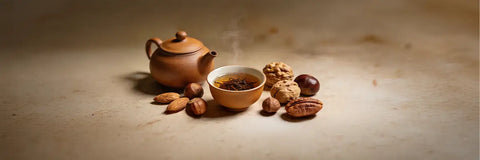
Does hojicha have nuts? The short answer is no. Pure hojicha is a roasted Japanese green tea made from a single ingredient: Camellia sinensis leaves or stems, with nothing else added at any point during production.
The confusion is genuine. Hojicha carries a warm, toasty aroma that many people instinctively compare to roasted almonds or hazelnuts.
That scent is produced entirely by chemistry inside the tea leaf itself during high-heat roasting, not by any nut-derived ingredient.
If you have a nut allergy, the ingredient list is only the first question. The production environment matters too, and that is brand-specific.
This article explains exactly why does hojicha have nuts come up so often as a search, what creates the aroma, and how to confirm a product is safe before you buy.
If you are already curious about trying it, the Japanese loose-leaf teas at Nio Teas include a curated hojicha selection worth exploring.
Does Hojicha Have Nuts? Pure Hojicha Is Nut-Free

Does hojicha have nuts? No. Pure hojicha contains only roasted tea leaves or stems with no nut ingredients, nut oils, or nut flavorings added during production. The nutty aroma people notice comes entirely from the roasting process, which creates compounds that smell similar to roasted nuts even though no nuts are present.
Hojicha is produced by roasting bancha, sencha, or kukicha leaves at temperatures between 160 and 220 degrees Celsius, a process covered in depth in our complete hojicha guide. There is one ingredient: tea. No nut oil, no nut flour, and no nut flavouring enters the process.
So the answer to does hojicha have nuts is no by ingredient, no by flavouring, and no by botanical category. The nutty impression is a sensory effect, not a material one.
Why Hojicha Tastes Nutty Even Though No Nuts Are Involved
The nutty quality comes from a process called the Maillard reaction. When amino acids and reducing sugars in the tea leaf are exposed to heat above 150 degrees Celsius, they react and produce new flavour compounds.
One class of compounds that forms during this process is pyrazines. These are the aromatic molecules responsible for roasted, nutty, and woody scents across many foods and drinks.
The same pyrazines appear in coffee, toasted bread, and roasted nuts, which is precisely why hojicha shares their aromatic character. The source material is completely different, but the heat chemistry is identical.
What Happens to the Tea Leaf During Roasting
The Maillard Reaction and Pyrazine Formation
As hojicha leaves reach peak roasting temperatures, the Maillard reaction accelerates, and pyrazine production intensifies. Pyrazines are volatile, meaning they evaporate easily and reach your nose before the liquid even touches your tongue.
This explains why the aroma of freshly brewed hojicha often feels stronger than the flavour itself. The roasted hojicha taste in the cup is smooth and mellow, while the scent feels almost dense by comparison.
Caramelisation and the Colour Change
Alongside the Maillard reaction, natural sugars in the leaf caramelise as temperatures rise. This process turns the leaves from green to a warm reddish-brown and adds the mild sweetness that defines the hojicha flavor profile.
The combination of pyrazine compounds and caramelised sugar notes produces an aroma many people describe as toasted grain, chestnut, and faint dark chocolate. None of those impressions require any nut to be present.
Does Hojicha Have Nuts in the Facility Even If Not in the Tea
This is where the question does hojicha have nuts becomes more nuanced. The tea itself is inherently nut-free. But the production facility where a specific brand processes and packages their hojicha may also handle nut-containing products.
When food products are made on shared equipment, trace amounts of nut protein can transfer to products with no nut ingredient. This is called cross-contact, and it is precisely what 'may contain tree nuts' advisory labels are designed to flag.
For someone with a serious nut allergy, asking does hojicha have nuts is not enough on its own. The equally important question is whether the brand uses a dedicated nut-free facility or shared production lines. Hojicha is one of the most distinctive and approachable teas in the Japanese loose leaf category, and its roasted flavour translates equally well into baking — hojicha cookies are a simple, satisfying way to explore what the roasted notes can do in a recipe.
If you are managing hojicha and allergies for yourself or someone else with a severe reaction history, consulting a medical professional before adding any new food or drink to your diet is the right approach.
How to Verify a Hojicha Product Is Safe for Nut Allergy
Read the Ingredient List and Allergen Statement
Pure hojicha should list only roasted green tea or an equivalent phrase. Any additional ingredient deserves closer reading.
Below the ingredient list, most brands include a formal allergen statement. Look for both a 'contains' declaration and any 'may contain' advisory language covering tree nuts or peanuts. Both sections matter, and the advisory language is not optional reading for allergy sufferers.
Contact the Producer if the Packaging Is Not Explicit
Allergen management practices vary significantly between tea producers. If the label does not confirm a nut-free facility, reaching out directly to the brand is the most reliable route.
Ask specifically whether hojicha is processed in a nut-free facility and whether shared equipment is used across nut-containing products. A confident answer to both is what you are looking for. Not sure whether hojicha or matcha is the right fit for you? The differences are bigger than most people expect. 👉 Hojicha vs Matcha: Differences Explained by a Tea Expert
The Hojicha Flavor Profile for People Tasting It for the First Time
What to Expect in the Cup

First-time hojicha drinkers are often surprised by how different it tastes from other Japanese teas. The roasted hojicha taste is smooth and low in bitterness, with a warmth that sits far from the grassy sharpness of sencha vs hojicha comparisons make very clear — two teas that share a plant but almost nothing else.
The roasting process breaks down catechins, the polyphenols responsible for astringency in green tea. What remains is a clean, mellow cup with caramel sweetness and a light woodiness.
Where Hojicha Sits in the Japanese Tea Family
Among Japanese loose leaf teas, hojicha occupies a distinctive position. Its low caffeine content makes it practical in the evening. Its approachable flavour makes it an easy entry point for people new to Japanese tea. Beyond the flavour, there is a lot to like about what this tea does for you. 👉 9 Hojicha Benefits Explained by a Tea Expert
If the hojicha flavor profile draws you in, exploring the broader range of Japanese loose leaf teas at Nio Teas is a natural next step.
Final Thoughts
Does hojicha have nuts? No. Not as an ingredient, not as a flavouring, and not as a botanical relative. The nutty impression is produced entirely by the Maillard reaction and pyrazine formation during high-heat roasting.
For most people, that closes the question. For anyone with a nut allergy, asking does hojicha have nuts is step one. Step two is confirming the specific product was processed in a nut-free facility, because that information is brand specific, not tea specific.
Hojicha is one of the most distinctive and approachable teas in the Japanese loose leaf category. Ready to find a trustworthy source? This guide covers everything you need to make a confident first purchase. 👉 Where to Buy Hojicha: Insider's Buying Guide. If you want to try it, the hojicha range at Nio Teas is a practical starting point.

Comments (0)
There are no comments for this article. Be the first one to leave a message!